Home » Living with arthritis » Movement & Pain » Pain management » Taking control of your pain in arthritis
Taking control of your pain in arthritis
Quick links
Joint pain is the most common symptom of arthritis, alongside stiffness and swelling, but it doesn’t have to control your life. This short animation shows how everyday support, gentle movement and the right advice can make joint pain easier to manage.
Follow Maya as she learns that asking for help, staying active and talking to her healthcare team can make hard days easier.
Why pain matters
Pain is your body’s way of telling you something isn’t right. It’s a signal to act, not something to put up with.
Arthritis pain often comes from inflammation or swelling in the joints. It isn’t always a normal part of ageing and getting help early can prevent lasting damage to your joints.
If pain is making everyday tasks harder, talk to your doctor. Together you can build a plan that works for you.
What you can do
There’s a lot you can do to manage arthritis pain, and small actions add up.
- Keep moving. Gentle exercise like walking, tai chi, water exercise, yoga or stretching at home can ease stiffness and strengthen the muscles that support your joints. Listen to your body to find what’s right for you.
- Talk about your pain. Share how you’re feeling with your healthcare team, family and friends. Your support team wants to help, and it’s okay to accept that help.
- Look after your mind as well as your body. Breathing exercises, relaxation and staying connected with your community are all good for your mental health and can change how pain affects you.
- Plan for flares. Learn to recognise the early signs of a flare so you can adjust your activities, rest when you need to, and manage symptoms before they escalate.
- Use medicines wisely. Medicines can help, and they work best when combined with other strategies. Your doctor or pharmacist can help you find the right approach.
Want to know more?
This animation is based on our booklet Taking control of your pain in arthritis. The booklet covers each of these strategies in more detail, including the pain cycle, working with your healthcare team, and treatment options.
The Taking Control of Your Pain in Arthritis animation was created by Arthritis Australia alongside an Expert Advisory Group and Community members, with funding from the Australian Government Department of Health and Aged Care.
Read the transcript
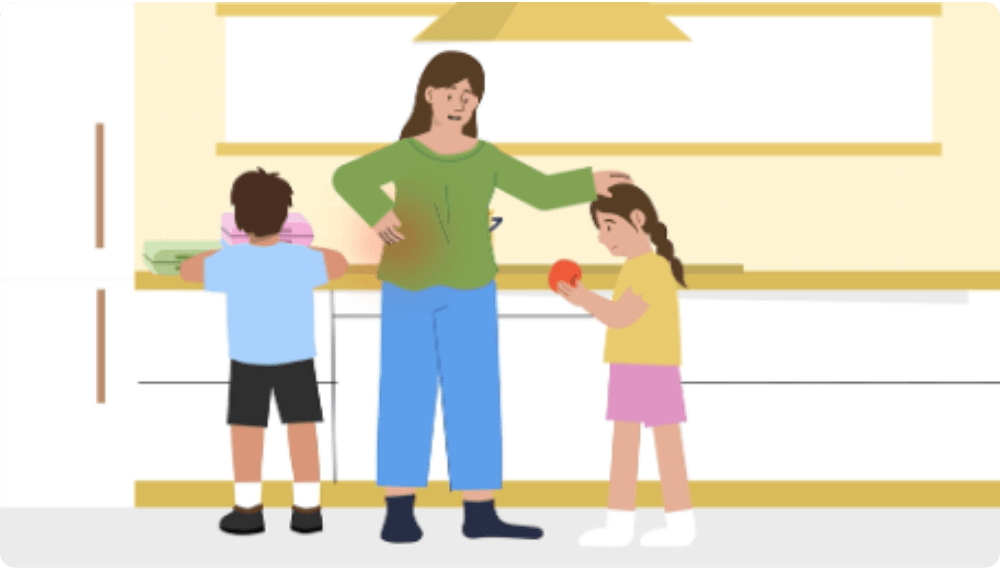
Scene: a family is at home getting ready for the day. Mum, Maya, has needed help getting her socks on this morning and now she is preparing packed lunches for the children and an apple rolls off the kitchen counter.
Maya: I’ll pick up some bananas.
Narrator: Pain is a common symptom of arthritis. It often comes from inflammation or swelling of the joints. Don’t ignore your pain. Pain doesn’t have to be a part of ageing. Pain lets you know that you should get help early. Talk to your doctor.
Scene: Maya sits at the table and is pouring herself a cup of tea from the teapot, but she grimaces at the pain in her wrists. Her husband is sitting with her and notices her pain.
Adam: Hey, I’ve noticed you’ve been having harder days lately. Maybe at your next appointment you could chat with your doctor about your pain and what you could do to help it each day.
Narrator: Arthritis doesn’t need to control your life. When everyday tasks start to feel harder, it’s okay to reach out for support. Talk to your doctor, physiotherapist, family and friends. Your support team wants to help you. It’s okay to accept their help.
Scene: At the supermarket, Maya is struggling with the shopping trolley.
Maya: Oh, dear.
Friend: Maya! Looks like you could do with some help.
Maya: Thanks. I had a flare up last night. I’m in a lot of pain today. I struggled getting the kids ready for school. It’s so frustrating. Lottie had to pull my socks on.
Friend: Managing pain in arthritis can be really tough. You’re doing your best. You should take it easier on yourself. Have you thought about coming back to yoga? It might give you a bit of breathing space. And if yoga doesn’t fit, there are other things too, like walking, tai chi, water exercises, or even some gentle stretching at home.
Maya: I really did enjoy yoga, and it made my joints feel less stiff.
Friend: Being around others can help too. It makes it easier to stay motivated. Or if you’re not up for that, you could try some yoga breathing and gentle exercises at home.
Maya: To be honest, I struggle to find the time. I know the breathing and stretches help to ease the pain.
Friend: You can do an online class in the evening. I like the 8pm class, it’s a good time for mums. The kids’ dinner is over, so you could sneak away and have some personal time.
Maya: Yeah, I could probably manage that.
Friend: You don’t even have to leave the house, and you can turn up in your pyjamas, and no one will know.
Maya: Now that’s my kind of exercise.
Narrator: Talk about your pain with your healthcare team, family and friends. Even children can provide support. Staying connected through your community is good for your mental health. Keep moving, even gentle exercise is good. Listen to your body to find the right exercises for you. Managing pain can feel easier when you find what works for you.
Take control of your pain through movement. Expert-led videos to help you exercise safely and live well with arthritis.
Find out which types of exercise are safe and helpful when you’re living with arthritis.
Learn how to recognise a flare and take action to minimise its impact.
Find out who can help you manage your arthritis, what to expect from your care and how to get the most from it.
Find a program to help you get Moving with Arthritis
Knowing where to get started moving with arthritis can feel overwhelming. Moving with Arthritis brings together exercise programs, videos to follow at home, and practical information. Explore how to get moving, bust common myths, and find a local or online program near you.